
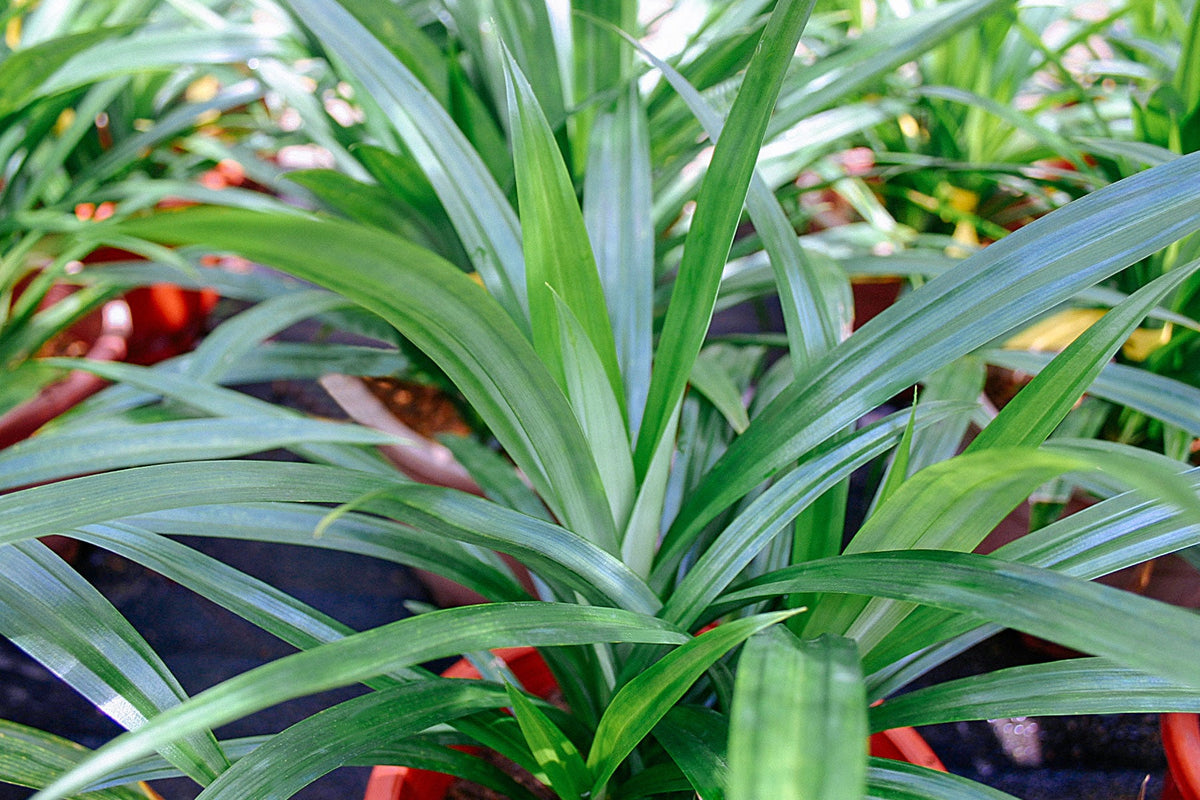

Pandanus amaryllifolius, commonly known as Pandan, is a herbaceous tropical plant that grows extensively in Southeast Asia. They are undoubtedly one of Singaporeans’ favourite edible plants, with their presence in many of our local delights. Whip up a Pandan cake or Nasi Lemak by using your homegrown Pandan plant! Read more on their care tips below:

General Care:
Light
Pandan need bright, direct light to thrive. Place them in full sun for optimal growth. They are also able to tolerate semi-shaded areas.
Water
Pandan love moisture, but they can grow to be more drought tolerant as they mature. Water your Pandan plant when the top 1-3 inches of soil feel dry to the touch. Keep the water off the leaves and water from the base of the plant, directly at the soil. If your Pandan plant is grown in a pot, ensure that it has a good drainage hole to prevent waterlogging.
Potting medium
Pandan thrives in fertile and well-draining soil that is able to hold moisture. Add materials like vermiculite to improve moisture retention and aeration of your medium.

Shop: Vermiculite
Fertiliser
Feed your Pandan plant with natural organic foliage fertiliser once or twice a month to stimulate growth.
Common Issues
Why are my Pandan leaves yellowing?
While Pandan is a relatively easy plant to grow, one of the most common issues that affect them is moisture stress caused by overwatering. Overwatering often results in root rot, a fungal disease that may potentially spread throughout the plant. To prevent overwatering, ensure that your Pandan plant is potted in well-draining soil. Include materials like perlite and cocopeat into your medium that help with the aeration of the soil. Adjust your watering frequencies accordingly and ensure that your pot has a drainage hole so that excess water can be drained out. (Read more about overwatering here)
The presence of pests may also result in yellowing leaves of your Pandan plants. Aphids, mites, and mealybugs are among some of the most common pests that affect Pandan plants. Check your plant regularly for pest infestation and treat your infected plant with neem oil or your preferred insecticide.
What can you do with Pandan leaf?
Pandan leaves are prized for their aromatic fragrance - a grassy vanilla scent with a hint of coconut. They are often used in our local cuisine to lend its unique coconut taste and aroma to flavour desserts, drinks, and savoury dishes. Other than their culinary uses, many taxi uncles also place Pandan leaves in their cars to use them as natural air fresheners. They are also commonly used by many local Singaporeans as a cockroach deterrent as their smell is said to repel these pests!


Share:
Get To Know: Rosemary
Get To Know: Dill