
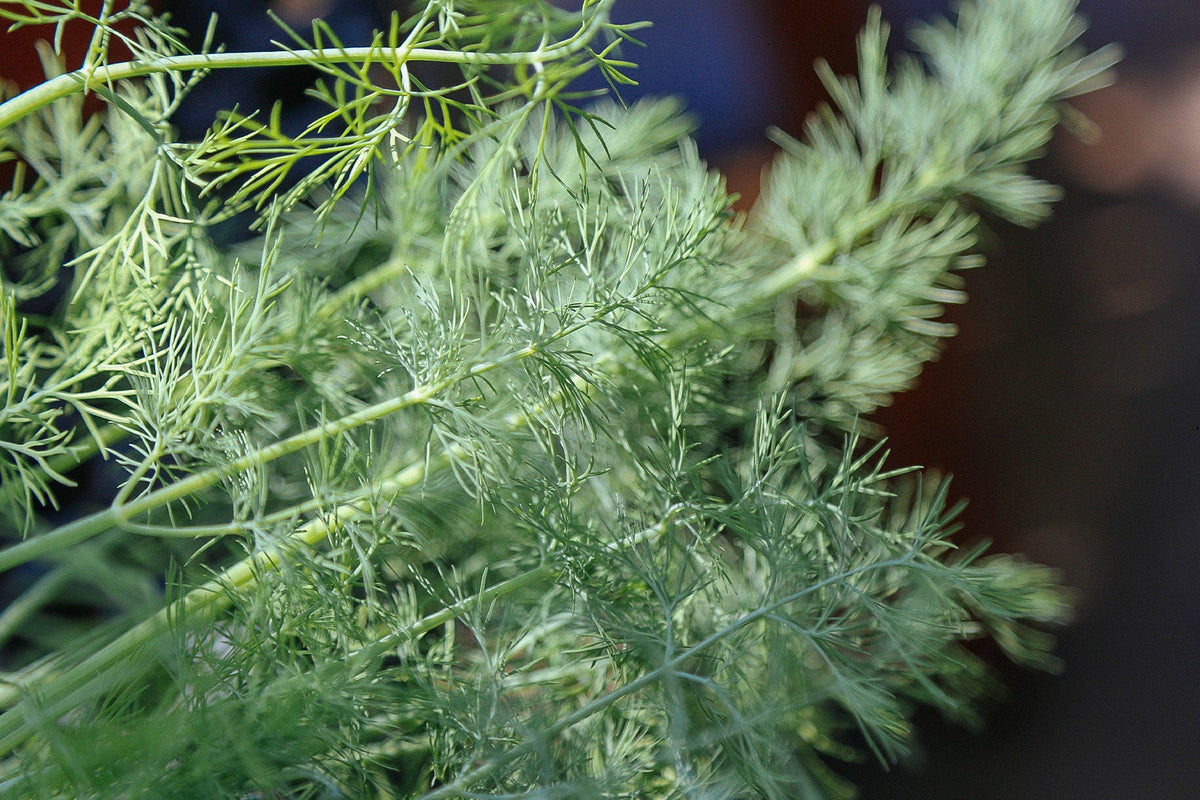

‘Anethum graveolens’ or more commonly known as Dill, is a popular kitchen herb with delicate feathery leaves that is highly aromatic and loved for its fresh, citrus-like taste. While it is most often paired with pickles, the subtle sweetness and fresh aroma of Dill can complement fish and seafood dishes too. Growing dill may be a little tricky, but you can grow your own with our handy guide below!

General care:
Light
Dill needs plenty of sunlight to grow well. It is ideal to place them in full sun where they can get at least six hours of sunlight every day.
Pro tip: Place your dill plant in a location that offers protection from the wind, as their tall thin stems can be easily toppled by strong winds!
Water
Dill requires regular watering, especially in hot weather. Water when the top 1 - 3 inches of soil feel dry to the touch. It is important not to overwater and allow your dill plant to sit in waterlogged soil.
Potting Medium
Dill grows best in well-draining soil. We recommend using our Welgro Superior Substrate soil which is pre-mixed with pumice. Pumice's naturally open structure prevents waterlogging, permits aeration, and aids in the development of roots.

Shop: Welgro Superior Substrates
Fertiliser
Like most herbs, Dill plants are not heavy feeders and do not require additional fertilizer. However, you can apply a balanced fertilizer once every 1-2 months to spur a more rapid, healthy growth.
Common issues faced by Dill
Why is there discolouration on my Dill’s leaves?
Aphids infestation may result in your dill plants getting infected with the Carrot Motley Dwarf disease. As the name suggests, Carrot Motley Dwarf originates from carrots and is transmitted by aphids. The disease causes yellow and red discoloration of leaves and general stunting of plant growth. Apply neem oil or your preferred insecticide to your dill plant to control and get rid of aphids' population.
Why is there powdery white spots on my Dill plant?
Powdery mildew is a fungal disease that appears as powdery light grey or white spots on the leaves of your plants. This fungal disease attacks the leaves and flower stalks of dill plants, resulting in chlorotic (yellowing) leaves and distorted blooms. Powdery mildew favours conditions with high humidity. To prevent its spread, regularly prune your dill plant to help increase air circulation around your plant. Treat your infected plant by removing affected plant parts and applying protective fungicide.

Shop: Garden Safe Organic Pesticide & Fungicide
What to do with Dill
Pro Tip: Snip off fresh dill leaves as needed when the plant has reached a height of 8 inches or taller.
Stir your fresh cut dill with cooked potato or sprinkle over salmon with a squeeze of lemon juice before you pan-fry or grill. The subtle sweetness also complements garlic & mint, adding a refreshing twist to your meals & drinks.


Share:
Get To Know: Pandan
Sensory Garden For Kids